For aspiring film enthusiasts, delving into the nuances of an actor’s performance is paramount. It’s a fascinating journey to dissect how an artist embodies a character, and even more so to compare their portrayal across different roles. Yet, it’s common to find actors gravitating towards certain character types they excel in. However, the real intrigue lies in observing an actor’s ability to seamlessly transition between diametrically opposed roles. Not only the acting capabilities, but the whole film’s cinematography, narration and execution brings the character to life. By analyzing such instances, we unravel the factors that enable them to authentically inhabit disparate characters with equal conviction.
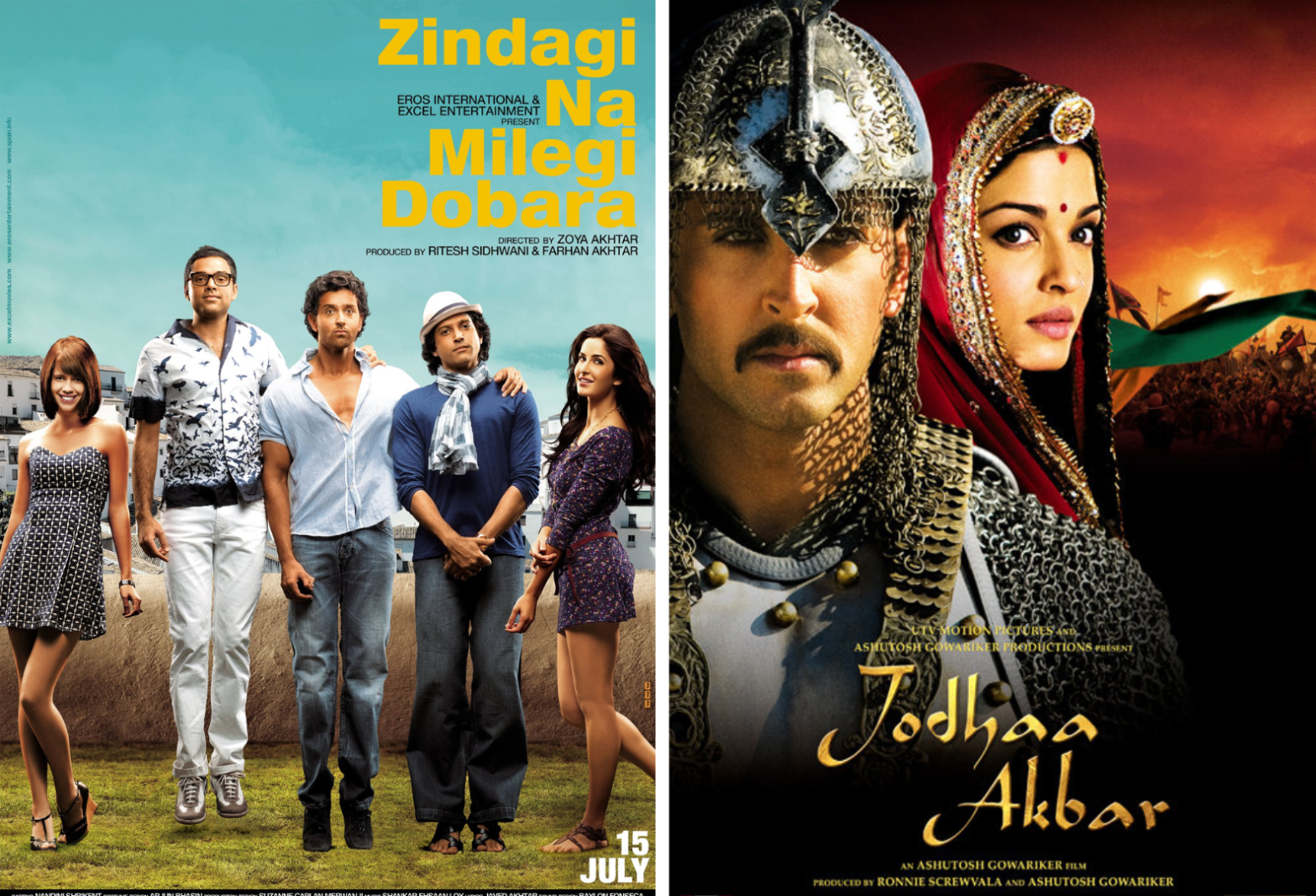
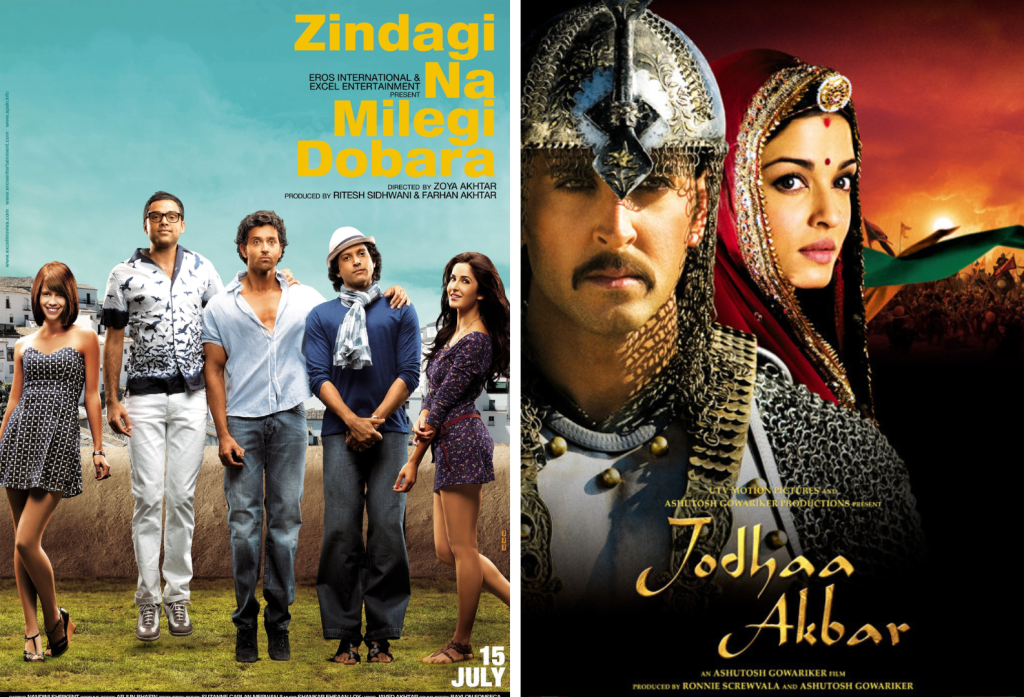
I’ve chosen Hrithik Roshan as the actor for this analysis, focusing on his performances in “Zindagi Na Milegi Dobara” (2011), directed by Zoya Akhtar, and “Jodhaa Akbar” (2008), directed by Ashutosh Gowariker. These films are vastly different, with one set in modern times and the other during the Mughal era under Emperor Akbar. Hrithik Roshan, who has received widespread acclaim for his portrayal of characters in both films, exemplifies his versatility and depth as an actor. Beyond his acting prowess, Hrithik Roshan also commands a significant star persona, adding another layer of complexity to his performances.
While both films lean towards representational acting, “Jodhaa Akbar” includes moments of presentational acting, particularly through Akbar’s high and lofty monologues. These deliberate choices establish a powerful image of an enlightened emperor who reflects on and vocalizes his thoughts for the audience. In both movies, Hrithik Roshan’s characters are introduced through their occupations: in “Zindagi Na Milegi Dobara,” he is presented as a high-powered financial broker, immersed in fast-paced deals; in “Jodhaa Akbar,” he commands an attack, embodying the authority of an emperor. Despite the seeming similarity in these introductions, the contrasting sound effects and settings create distinct atmospheres, highlighting the differences in their worlds.
In “Jodhaa Akbar,” the film incorporates traditional Sufi-based music to create a mystical, powerful atmosphere with a touch of historical authenticity. In contrast, “Zindagi Na Milegi Dobara” features bass-heavy instrumentals to evoke a feel-good, contemporary vibe.
Hrithik Roshan’s features make him ideally suited for portraying both a commanding emperor and a modern hunk. Makeup and costume designers skillfully manipulate his appearance to fit each role. As Akbar in “Jodhaa Akbar,” Roshan is depicted with long hair, elaborate clothing, and a distinctive mustache, all of which evoke the grandeur of the Mughal era. Conversely, in “Zindagi Na Milegi Dobara,” he has shorter, often messy hair and sharper features, fitting the image of a financial trader. The costume design emphasizes the theme of “boys having fun while exploring tourist adventures,” featuring clean yet comfortable clothing with a rugged look. His frequent use of sunglasses not only complements the sunny Spanish backdrop, accentuated by bronze hues and filters, but also enhances the sharpness of his character.
As a financial broker, Hrithik Roshan’s character in “Zindagi Na Milegi Dobara” uses varying tones and languages to communicate, blending comical delivery with a mix of professionalism and romanticism. He projects confidence, though he becomes vulnerable around his love interest, showing his willingness to explore relationships at his own pace. The director employs long and mid shots to reflect the camaraderie among friends.
In contrast, as Emperor Akbar in “Jodhaa Akbar,” Roshan maintains a consistent, authoritative tone with everyone, befitting his imperial role. His powerful, commanding voice, paired with low-angle shots, reinforces his image as a ruler. The dialogue, a blend of Hindi and Urdu, adds an artistic touch to the film. Akbar’s different relationships are subtly conveyed through his repressed emotions, highlighting the nuanced dynamics he shares with others.
In “Zindagi Na Milegi Dobara,” Hrithik Roshan’s character undergoes a significant transformation in his outlook on life by the film’s end. In contrast, “Jodhaa Akbar” focuses on the evolving relationships of the main character, emphasizing the importance of portraying a personality that feels both acceptable and real. This is why Arjun, in “Zindagi Na Milegi Dobara,” is seen dancing to various tunes in Hrithik Roshan’s signature style. The film features classic voiceovers during scenes like “Khwabon Ke Parindey,” where the singer’s voice might not perfectly match Roshan’s, yet the scene remains aesthetically pleasing. The focus here is more on the lighting and Roshan’s physicality, such as running his hands through his wavy hair, highlighting Hrithik Roshan’s stardom over Arjun’s character.
In “Jodhaa Akbar,” Akbar participates in singing and dancing in only two scenes. The first is on his wedding night, where he is moved by a Sufi song, and the second is in a bedroom scene where he sings to Jodha. This latter scene feels authentic because the singer’s voice complements Hrithik Roshan’s natural voice, delivered in a not-so-professional, shaky, and broken manner, enhancing its believability.
Both characters may appear to follow similar romantic trajectories, transitioning from new acquaintances to romantic relationships, but the nature of their hesitations differs greatly. In “Zindagi Na Milegi Dobara,” Arjun’s relationship with Laila begins through the interaction of contrasting personalities, with external events drawing them closer. Conversely, in “Jodhaa Akbar,” the romance is rooted in a political alliance where marriage precedes romantic interaction, and external forces create tension.
The characters’ gazes reflect these differences. In “Zindagi Na Milegi Dobara,” Arjun holds his gaze, often reciprocated by Laila, symbolizing mutual interest and growing intimacy. In “Jodhaa Akbar,” Akbar and Jodha often exchange furtive glances, highlighting their internal conflict and hesitation. Akbar’s role as an emperor restricts him from openly displaying affection, heightening the tension between duty and desire.
Arjun gradually transforms in Laila’s presence, shedding his tough exterior. In contrast, Akbar, despite showing tenderness towards Jodha, never relinquishes his dignified and authoritative demeanor as an emperor, maintaining a balance between his responsibilities and personal feelings.
Ultimately, bringing a character to life is not solely dependent on the actor’s performance. It is a collaborative effort involving directors, writers, set designers, costume designers, cinematographers, and many others who work together to create a believable and compelling character.
 Tulii Lens