MINISTRY OF COMMERCE & INDUSTRY
Government of India
INDIAN INSTITUTE OF PACKAGING (IIP)
In collaboration with
National Jute Board
Ministry of Textiles
Government of India
HACKATHON ON
Sustainable Jute Based Packaging Solutions
for Premium Horticultural Produce
Submitted By
Ellora Sinha Independent Researcher & Design Strategist
1.3.2026
Suspended Honeycomb Jute Cradle System for Premium Indian Mango Exports
1. Executive Summary
India is the world’s largest producer of mangoes, contributing approximately 40–45% of global mango production, with annual production estimated between 20–25 million metric tonnes (FAOSTAT, 2023; APEDA, 2023). Despite this dominance, India exports less than 1% of its total production annually, typically in the range of 20,000–30,000 metric tonnes (APEDA, 2023).
Premium varieties such as Alphonso and Kesar command strong demand in key export markets including the UAE, UK, USA, Qatar, and EU nations (APEDA, 2023). However, current export packaging systems rely heavily on corrugated fiberboard cartons combined with molded pulp trays, foam nets, and plastic liners. These systems present limitations in bruise prevention, compression load transfer, airflow management, and sustainability compliance.
With increasing regulatory pressure in EU and UK markets for plastic reduction under extended producer responsibility (EPR) frameworks and packaging waste directives (European Commission, 2022), there is a clear opportunity to innovate sustainable, structurally superior export packaging systems.
This proposal introduces a Modular Suspended Honeycomb Jute Cradle System, designed to:
- Minimize bruising through fruit suspension
- Reduce reliance on foam nets and plastic cushioning
- Improve airflow and natural ripening during transit
- Align with sustainability regulations in importing countries
2. Industry Context & Problem Statement
2.1 India’s Mango Export Landscape
- India contributes ~40–45% of global mango production (FAOSTAT, 2023).
- Major producing states for premium varieties include:
- Maharashtra (Alphonso)
- Gujarat (Kesar)
- Uttar Pradesh (Dasheri)
- Andhra Pradesh (Banganapalli)
- West Bengal (Himsagar) (APEDA, 2023).
Despite production dominance, export volumes remain relatively low compared to total output. Export constraints include:
- Strict phytosanitary standards (USDA APHIS, 2022).
- High rejection rates due to bruising and fungal spoilage.
- Packaging-related compression damage during long-haul logistics.
2.2 Current Export Packaging Systems
Premium mango exports typically use:
- Corrugated Fiberboard (CFB) cartons
- Molded pulp trays
- Foam net sleeves
- LDPE liners for moisture control
- Ventilated carton designs
Corrugated packaging is widely used due to stack strength and recyclability (Singh & Reddy, 2017). However:
- Mangoes rest on rigid pulp trays → pressure points form.
- Vertical stacking transfers compression load through fruit layers.
- Foam nets (polyethylene-based) are widely used but contribute to plastic waste.
- LDPE liners restrict airflow and increase condensation risk.
2.3 Sustainability & Regulatory Pressures
EU and UK markets are increasingly regulating:
- Non-recyclable plastics
- Expanded polystyrene (EPS)
- Excessive single-use packaging
Under the EU Packaging and Packaging Waste Directive (European Commission, 2022), exporters are encouraged to shift toward recyclable and biodegradable materials.
This creates a design opportunity for jute-integrated systems.
3. Project Objectives
- To analyse structural and functional gaps in current premium mango export packaging.
- To design a suspended fruit-support system using jute-based cradles.
- To develop a modular sliding tray box architecture that prevents compression damage.
- To align the solution with sustainability and export compliance requirements.
- To establish a validation roadmap with IIP for compression and vibration testing.
4. Proposed Innovation: Suspended Honeycomb Jute Cradle System
4.1 Concept Overview
The proposed system consists of:
A. Modular External Box
- Reinforced corrugated fiberboard structure.
- Front-opening configuration.
- Integrated sliding rails for tray insertion.
B. Sliding Honeycomb Trays
Each tray includes:
- Rigid honeycomb grid partitions.
- Slide-in rail compatibility.
- Stackable multi-layer configuration.
C. Jute Suspension Cradle Saddles
Each grid cell contains a soft, open-weave jute cradle anchored at four points.
Functional Mechanism:
- Mango remains suspended rather than resting on a rigid surface.
- Compression loads are transferred to tray frame edges.
- Open weave enables natural airflow around the entire fruit surface.
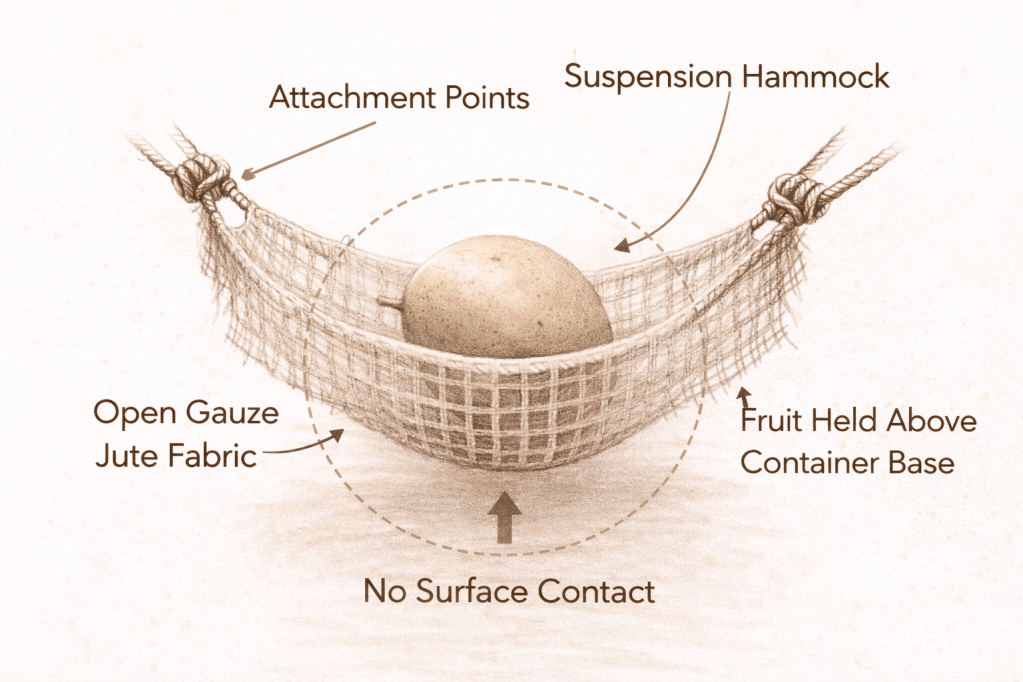
Image 1: Jute hammock cradle system for individual fruit
D. Structural Load Logic
Unlike conventional systems where fruit bears stacking load, this design ensures:
- Frame-to-frame vertical load transfer
- Fruit remains mechanically isolated
- Reduced bruise incidence
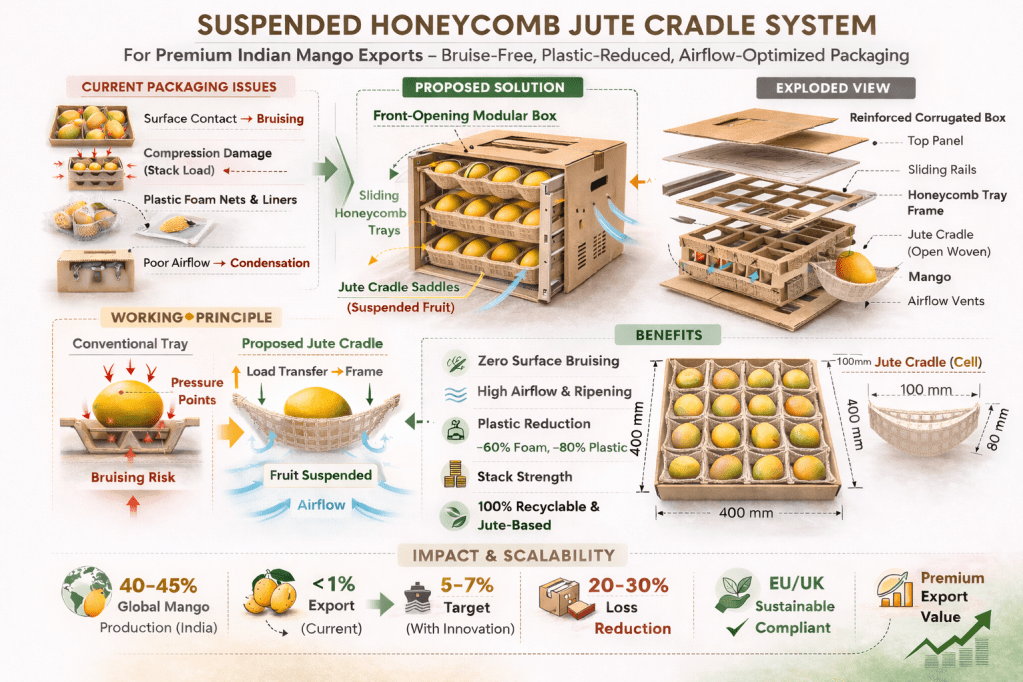
Image 2: Diagram of the Suspended Honeycomb Jute Cradle System
5. Innovation & Novelty
The innovation lies in:
- Transition from surface-support to suspension-support packaging.
- Replacing polyethylene foam nets with breathable jute cradles.
- Integrating sliding modular trays for inspection and premium handling.
- Designing load-bearing frames separate from fruit support.
This positions jute as a structural and protective material rather than merely a bulk sack textile.
6. Commercial Feasibility
6.1 Manufacturability
- Jute cradle components can be stitched through existing jute clusters.
- Honeycomb partitions can be produced via modified corrugated die-cut systems.
- Box production remains compatible with standard Corrugated Fibre Board lines.
6.2 Market Alignment
Target segment:
- Premium mangoes like Alphonso, Himsagar and Kesar exporters
- Air freight and controlled sea freight consignments
- Sustainability-focused retailers in EU/UK
6.3 Competitive Advantage
- Reduced fruit rejection rates
- Sustainable branding differentiation
- Plastic reduction compliance
7. Expected Impact
Environmental
- Reduction in polyethylene foam nets.
- Reduced plastic liner dependency.
- Increased biodegradable material share.
Economic
- Lower bruising losses (post-harvest loss in mango can reach 20–30% in supply chains; NCCD, 2021).
- Higher premium export value realization.
Strategic
- Strengthens India’s premium mango export positioning.
- Integrates jute into high-value horticultural packaging systems.
8. Validation Roadmap
- Compression strength testing (IIP)
- Vibration simulation
- Moisture and airflow analysis
- Cost comparison vs current molded pulp systems
- Export pilot with West Bengal /Maharashtra/ Gujarat exporters
9. Conclusion
India produces nearly half of the world’s mangoes but captures limited export value. The Suspended Honeycomb Jute Cradle System presents a scalable, structurally sound, and sustainability-aligned packaging innovation tailored for premium mango exports.
By preventing surface bruising, reducing plastic use, and enhancing airflow, this system directly addresses export loss, regulatory pressure, and premium branding opportunities.
References
- APEDA (2023) Mango Export Data and Market Profile. Agricultural and Processed Food Products Export Development Authority, Government of India.
- European Commission (2022) Packaging and Packaging Waste Directive (PPWD). Brussels: European Union.
- FAOSTAT (2023) FAO Statistical Database – Mango Production Data. Food and Agriculture Organization of the United Nations.
- NCCD (2021) Post-Harvest Losses in Fruits and Vegetables in India. National Centre for Cold-chain Development, Government of India.
- Singh, Z. and Reddy, B. (2017) ‘Postharvest physiology and storage of mango’, Stewart Postharvest Review, 13(3), pp. 1–12.
- USDA APHIS (2022) Import Requirements for Fresh Mangoes. United States Department of Agriculture.
 Tulii Lens