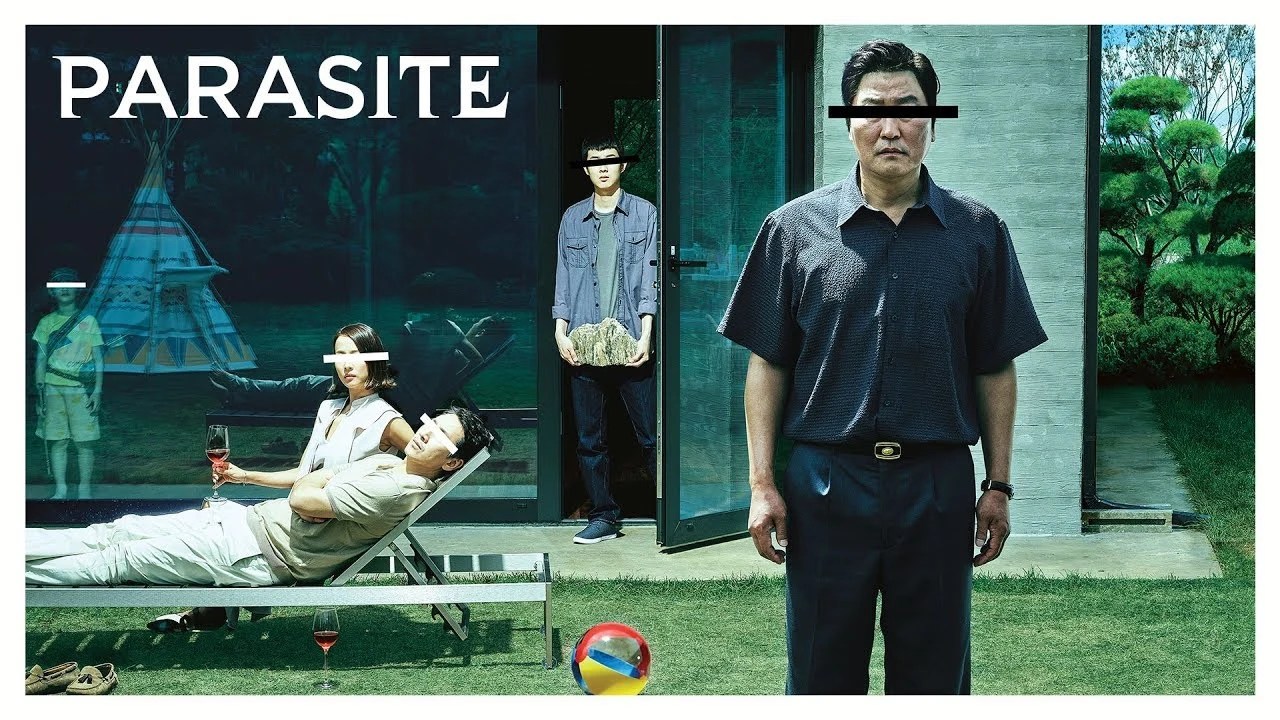
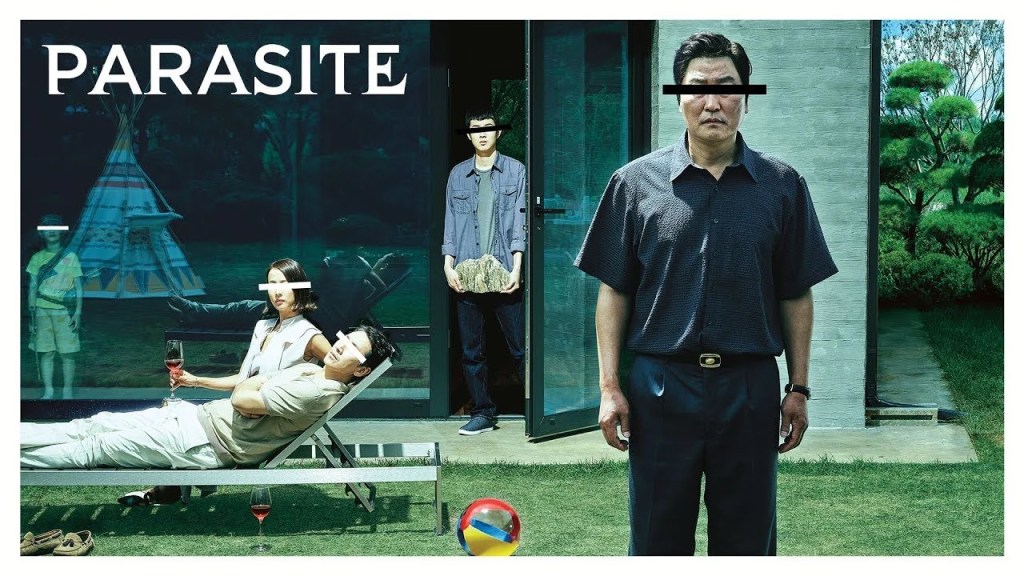
As an enthusiast of Korean cinema, the 2019 film Parasite marked a significant departure from the typical offerings found on various streaming platforms. Here’s a concise critical analysis of the film’s prominent elements that left a lasting impact on me as a viewer.
The film Parasite was released in 2019 and directed by Bong Joon-ho. The South Korean film has won multiple international awards, including the Academy Award. The cast includes some of the biggest names in the South Korean film industry, including Song Kang-ho, Choi Woo-Shik, Lee Sun-Kyun, and Park So-dam.
The storyline revolves around a seemingly straightforward premise where two families, the rich Park family, and the poor Kim family, share similar family structures. The Park family is shown as simpletons who are easy to deceive and manipulate as they are financially comfortable enough to not think in twisted ways. On the other hand, the Kim family is cunning and sharp, their fooling skills sharpen further on survival instincts.
The Kim family resides in a semi-basement dwelling, reflecting their impoverished financial state, yet they maintain a strong familial bond. Their house faces congested streets and unseemly views of people urinating and littering outside their windows.In contrast, the affluent Park family’s home overlooks a beautifully curated garden and expansive space inhabits a spacious, modern residence, but exhibits subtle interpersonal rifts within their relationships. The dialogues exchanged within the Kim family are viewed in congested spaces, highlighting their cramped living conditions. In contrast, similar conversations within the Park family take place in wide-open spaces, reflecting their spacious and comfortable lifestyle.
The film opens with a scene set in the semi-basement where the Kim family lives, symbolizing that their existence begins where others’ lives end. This introduces the first of many levels depicted in the film. Their perpetual second-place status is highlighted by a silver medal hanging on the wall, representing their minimal achievements. In contrast, the Park family home is adorned with numerous awards and achievements, prominently displayed throughout the house.
The Kim family struggles with even minimal tasks like folding boxes to make a living. Despite being financially destitute, they all appear healthy, suggesting they don’t prioritize future savings and instead spend all their money on present-day comforts.
The desire for material possessions by the Kim family is highly evident through a simple object introduced in the film: a heavy and apparent unique stone. A close friend of the son brings a stone to the family, which is said to bring material wealth. However, it becomes evident that material wealth also brings significant burdens to the family. As the son leaves for his first day at work, the mother is seen scrubbing the stone, hoping this action will enhance their material prosperity. However, the stone continues to become lighter as the film progresses, as the Kim family decidedly attempts to depart from their ground reality. Finally, the stone is seen floating in the water as the Kim family’s home is flooded with heavy rain, showing the vanity and the pretentiousness of the seemingly heavy and grounded stone.
The stone is one of the many metaphors used in the film. With each new member of the Kim family joining the Park household as an employee, a new dog is seen in the Park family, wagging its tail at the owner. This serves as a metaphor for the Kim family’s integration into the Park family.
However, securing a job in the Park house is indeed a carefully curated and spectacularly executed plan that plays out for the viewer’s amusement. Each element of hatching and executing a plan like playing with the household helps allergies with peach first is shown in great detail with clear shots and slow movements and is almost like an elegant orchestra being orchestrated by a group of musicians. The schemes and plans are aided with lots of close shots heightening the articulation of the master plan.
Another metaphor used amply in the film is lines. There are constant lines drawn between the two families, highlighting both invisible metaphorical boundaries and physical separations through set design and camera angles. This is particularly evident in the treatment of the drivers hired by the Park family. Mr. Park conveys that the driver crossed a line when he suspected him of having sex in his car. Despite the act itself, the driver should have stayed in the driver’s seat, indicating that even the car seats define class distinctions. The entire conversation between Mr. and Mrs. Park about this incident is depicted with over-the-shoulder shots, reflecting their suspicion and contemplation. Mr. Park mentions that the fired housekeeper was ideal because she never crossed the line, emphasizing his preference for people who adhere strictly to these boundaries. This amplifies his classist mindset. Additionally, Mr. Park is even disturbed by Mr. Kim’s smell, perceiving it as crossing an invisible line over to him.
Hints about the presence of a secret person in the house are subtly dropped early on through Mr. Park’s dialogue. He mentions that the household help used to have enough food for two people. At one point, he notes that the housekeeper knows the place better than anyone, underscored by an arrow shot by his younger son, suggesting the accuracy of the statement; she is indeed familiar with the house’s secrets.
Besides the housekeeper, the child is the only one aware of the hidden truths of the house. His silence and keen observation are far more powerful than any of the adults around him. In a telling scene, the little boy stands alone, looking through the kitchen window while his mother fires the housekeeper, amplifying his sense of loneliness, disconnection, and misfit in the house’s wide, clean space.
The costumes play a crucial role in the film, revealing the identities and connections of the characters. The Kim family’s similar-looking clothes underscore their unity and bond. When working for the Park family, they dress as smartly as possible, yet the class divide remains apparent through their attire. Even the old housekeeper dresses up for her role in the Park household, but later appears in shabby, worn clothes when she returns to tend to her husband, highlighting her fall from grace and the stark contrast between her two lives. The characters of both families wear plain, block colors, while the youngest child of the Park family sports colorful headgear. This signifies that he views the situation through a creative lens, making him more perceptive. He is also the first to notice the Kim family’s secret through their distinctive smell.
Once the entire Kim family arrives at the Park house, the house, personified as a character in the film, has fulfilled its purpose. A house rotten to the core attracts parasites, mirroring the facade of perfection hiding dark secrets within. The house reflects the Park family, appearing perfect on the outside but concealing a sinister truth. Every person entering the house, including the previous housekeeper and her husband, is portrayed as a parasite. The Kim family even indirectly compares themselves to cockroaches, hiding under furniture to evade the Park family’s unexpected return.
Throughout the film, the stairs play a significant metaphorical role in the film. The Kim family constantly climbs stairs to obtain anything, from jobs to simply getting a Wi-Fi connection in their bathroom.
The architecture of the house is even more enchanting and the basement of the Park family’s house takes the viewer even deeper than the Kim family’s semi-basement home. Here, beneath layers of luxuries, lay a space inhabited by society’s most marginalized—a realm where hope seemed a distant memory. The architectural design of the house mirrored the social hierarchy, with the uppermost layer reserved for the affluent Park family, while the ground level served as a common ground where interactions between the two families unfolded. Yet, it was in the basement where the true disparity was laid bare, a place devoid of sunlight and hope. Unlike the semi-basement where the Kim family resided, which offered at least a glimpse of the outside world, the Park family’s basement remained cloaked in perpetual darkness in a state that is even out of their imagination. The absence of sunlight served as a stark reminder of the hopelessness that pervaded this space. Just like how the Kim family can’t stay long on the uppermost floor with the Park family, the household help’s husband can’t find his way even to the ground level.
Despite the grandeur of the sitting area overlooking the lawn, with its expansive glass windows framing scenes of drama. Even though the Park family’s home is designed in a way where there should be ample sunlight coming in the house most of the scenes are shot at night with artificial light.
It was in this eerie atmosphere that the youngest Park child mistook shadows for specters, a testament to the chilling aura that enveloped the basement. This is captured perfectly by the Montage shot, where the youngest Park child thought that he had seen a ghost coming from the basement instead of a human. The enclosed lighting of the doorway leading to the basement makes the shadow even more fearful than in real life.
In the pivotal scene where the secret of the Kim family is laid bare in the basement, the dynamics between the characters undergo a dramatic shift. Initially, the old housekeeper is portrayed through high-angle shots, conveying her sense of intimidation and vulnerability. However, as the scene unfolds and the truth about the Kim family is revealed, the camera angles change, capturing the old housekeeper from a low angle. This shift in perspective imbues her with a newfound sense of authority and intimidation, symbolizing the reversal of power dynamics within the narrative.
By the film’s conclusion, it becomes evident that the son’s aspirations are built on hollow promises and unattainable dreams, ranging from his desire to enter university to his ambition of achieving enough success to liberate his father from the confines of the Park House basement. Ultimately, they all bear the consequences of these futile ambitions which started from the earlier dreams of employing his whole family, which ultimately destroyed a poor but once happy family. The family is back in their semi-basements, confined in the son’s futile ambitions and dreams once again.
 Tulii Lens